The problem with sizing an off-grid site
There is no grid to absorb a wrong estimate. An off-grid system sized for today's load either browns out when the load grows, or is over-built at the start and wastes money that could have bought panels.
Parallel operation moves that decision: install to the load you have, add an inverter when the load grows. The battery bank, breakers and cabling are the parts that must be sized for the end state from day one.
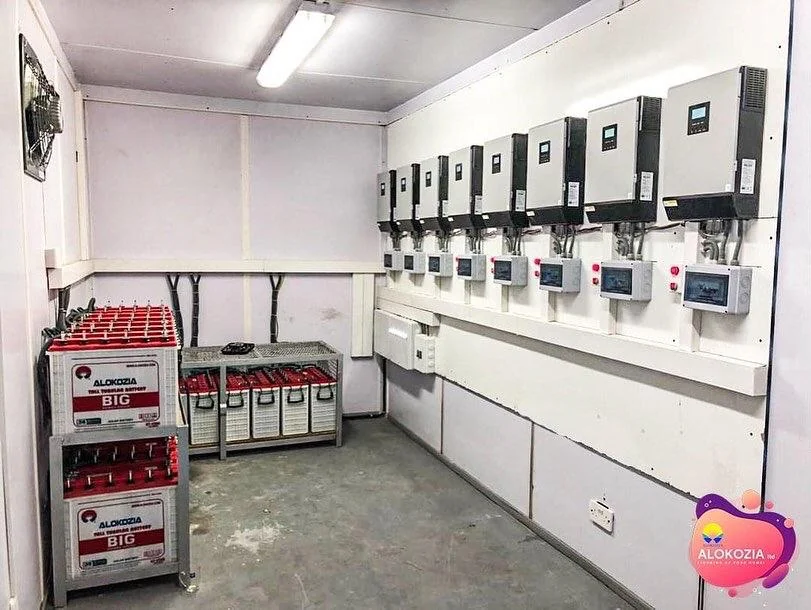
What the photo shows
Each unit has its own DC breaker and metering, feeding a common lead-acid bank. That per-unit protection is what makes the bank safe to work on while the rest of the system stays live.
Lead-acid still wins on first cost in this market. The inverters are battery-agnostic within their voltage window, so the same units will run lithium when the bank is replaced — the upgrade path without changing the inverters.
Design notes for a similar site
Size the bank in kWh from the night load, not from the inverter rating. Allow for depth of discharge — the nameplate capacity of a lead-acid bank is not the energy you can take out of it nightly. And leave wall space for one more unit and one more string: off-grid systems are almost never finished on the day they are commissioned.