The problem
The Philippines distributes at 460 V three-phase in many commercial buildings — a voltage inherited from the US standard, not the 380/400/415 V the GP33 range leaves the factory set to.
Adding a step-down transformer in front of the UPS would have cost floor space in a switch room that had none, and added a failure point to a hospital supply. It would also have added losses to a load that runs continuously.
The hospital could not accept a single point of failure either: theatres, imaging and the records system all sit behind this supply.
What we built
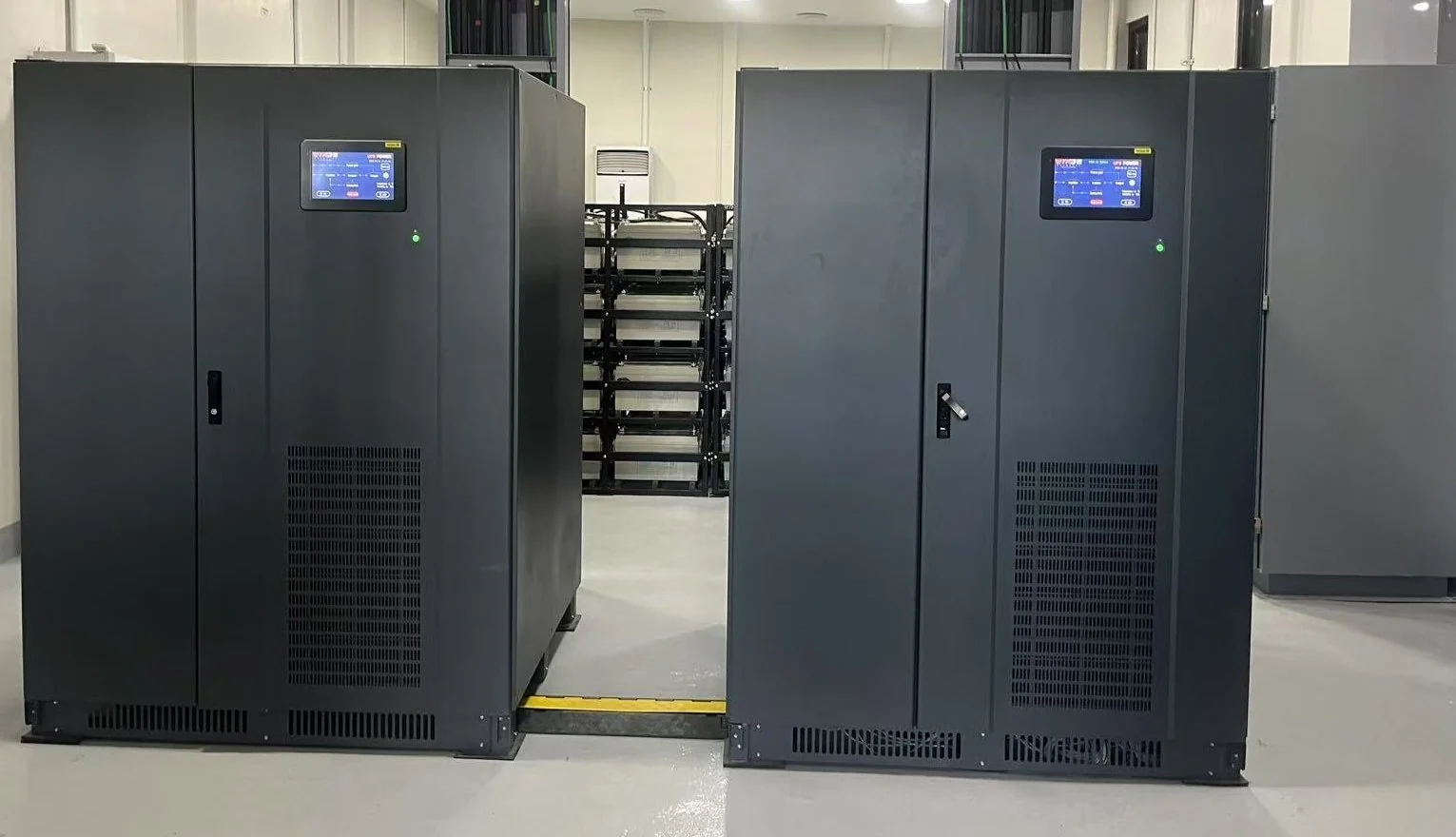
Two GP33 500 kVA frames were built with a 460 V output configuration at the factory — not field-modified — and commissioned in parallel on site, sharing the battery bank.
The result is 1,000 kVA of installed capacity with the redundancy a hospital load requires, from a platform that is otherwise a standard product. If one unit is taken out for service, the other carries the load; the paralleling is distributed, so there is no central bypass cabinet taking up another metre of wall.
Why it was not a catalogue order
Output voltage is set at the factory. Getting it wrong is only discovered at commissioning, which on a hospital project is the worst possible moment. The same applies to 440 V, 480 V and 60 Hz sites — say so at the enquiry stage and the frame is built to the site, not converted to it later.